Case study 01 / 03
TicoConta
Electronic invoicing for the family business, with modules specific to a timber business.
- Status
- In development for the family business
- Year
- 2026
- Role
- Full Stack Developer · Software Architecture
- Repository
- Private repository.
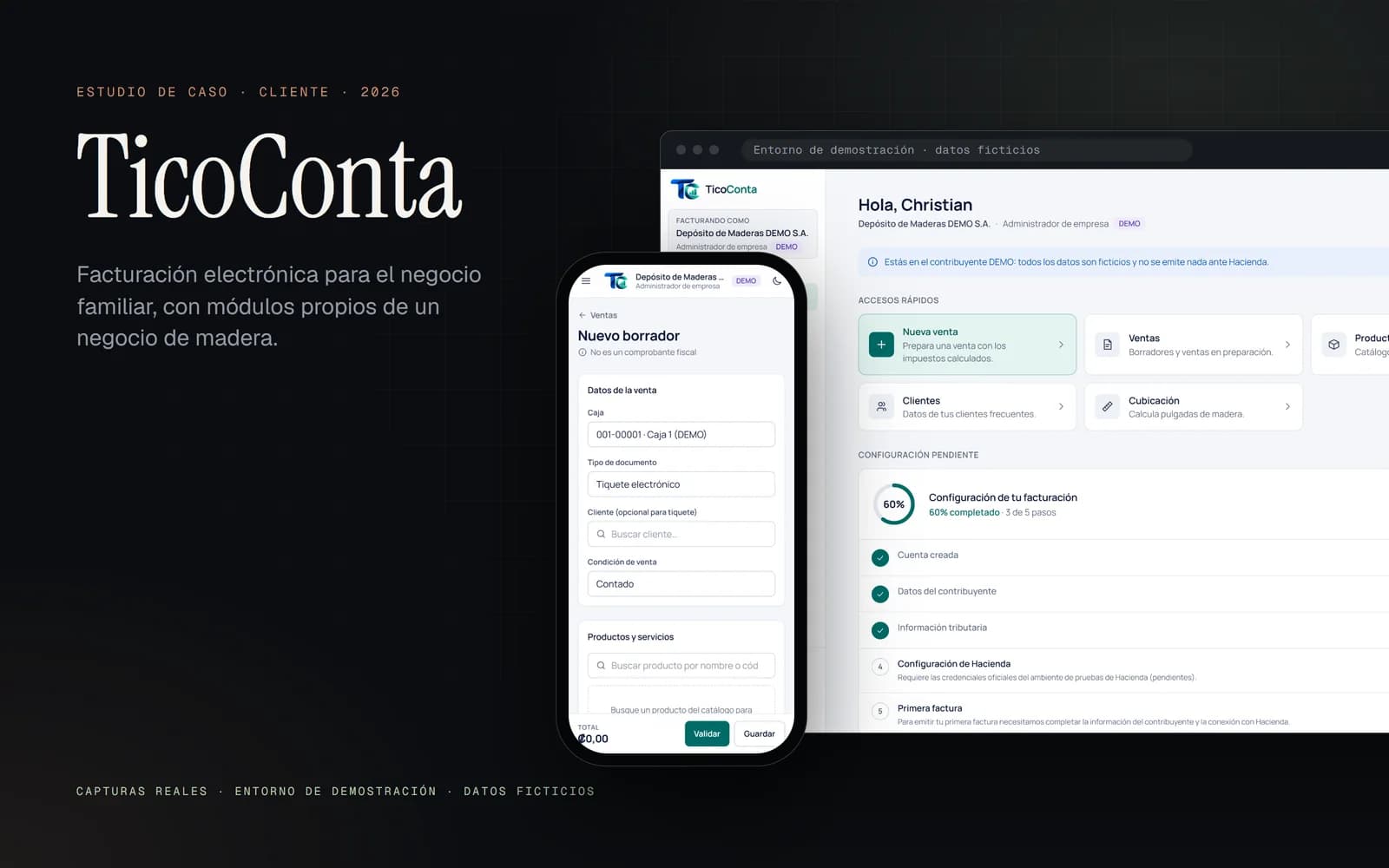
Written from the project’s documentation and code; pending the author’s confirmation.
Source: History, documentation and reports of the project repository.
01
Context
A system I am building for my father’s business, to reduce the administrative load and make day-to-day work easier. It handles electronic invoicing under Costa Rican rules (working name: TicoConta) and includes timber volume and paper-invoice digitisation modules.
Responsibilities
- System design and architecture: a modular monolith with an import contract between modules
- Frontend development: an installable web app with React, TypeScript and Vite
- Backend development: a FastAPI API with deterministic tax calculation and document signing
- Data modelling and management in PostgreSQL 16 with Alembic migrations
- API design and implementation, including the integration with Hacienda’s public API
- Integration between the interface, the API, the database and external services
- Interface and user experience design for operating from a phone
- Testing, validation and technical maintenance with pytest, Vitest and Playwright
02
Problem
Go from evidence of a sale to a valid electronic invoice, and stop relying on notebooks and paper invoices to run the business.
03
Solution
A modular API that calculates taxes deterministically, generates and signs the XML documents, and an installable web app to operate from a phone. The timber and digitisation modules propose data that a person reviews before confirming.
Built
- Multi-company with configurable roles and chained audit logging
- Official catalogues (CABYS) and a deterministic tax calculator
- Invoice, ticket and credit/debit note XML validated against the official v4.4 schemas
- XAdES-EPES signing and immutable storage with SHA-256 verification
- Timber volume calculation with exact arithmetic and mandatory human review
- Invoice digitisation by project, with review, duplicate detection, an arithmetic check against the written total and PDF summaries
- Tax-authority (Hacienda) connector to submit documents and check their status, tested against a local simulator
- Working integration with Hacienda’s public API: taxpayer data lookup when setting up the business, implemented and verified
Planned, in progress
- Accounting system (next stage)
- Inventory module (in development, not yet committed to the repository)
04
Architecture
A modular FastAPI monolith on PostgreSQL 16 in Docker, with Alembic migrations, and a React, TypeScript and Vite interface. An import contract stops the AI modules from depending on the tax modules.
- 01
Interface
React · Vite · PWA
- 02
API
FastAPI
- 03
Data
PostgreSQL 16 · Alembic
- 04
Documents
XML v4.4 · XAdES-EPES
05
Technologies
- Python
- FastAPI
- PostgreSQL
- Alembic
- Docker
- OpenAI API
- React
- TypeScript
- Vite
- Tailwind CSS
- pytest
- Vitest
- Playwright
- Cloudflare Tunnel
06
Technical decisions
- Technical anti-production barrier: nothing is sent to the tax authority without explicit authorisation.
- Exact decimal arithmetic; the server always recalculates and the browser never sends computed amounts.
- Whatever the AI reads stays pending human review and never replaces the written total.
- Secret scanning on every commit, with sensitive files kept out of the repository.
07
Verifiable results
556
backend tests passing
Stage 2 closing report (29 September 2026), not re-run
- According to the stage 2 closing report (29 September 2026): 556 backend tests passing with 94% coverage. They were not re-run in this review.
Known limits
- Looking up Hacienda’s public data is not issuing invoices: submitting documents and receiving their official acceptance have only been tested against a local simulator.
- In the repository, submitting documents to Hacienda’s production service is blocked in code until explicitly authorised.
- The repository’s data is fictitious.
08
Screenshots and evidence
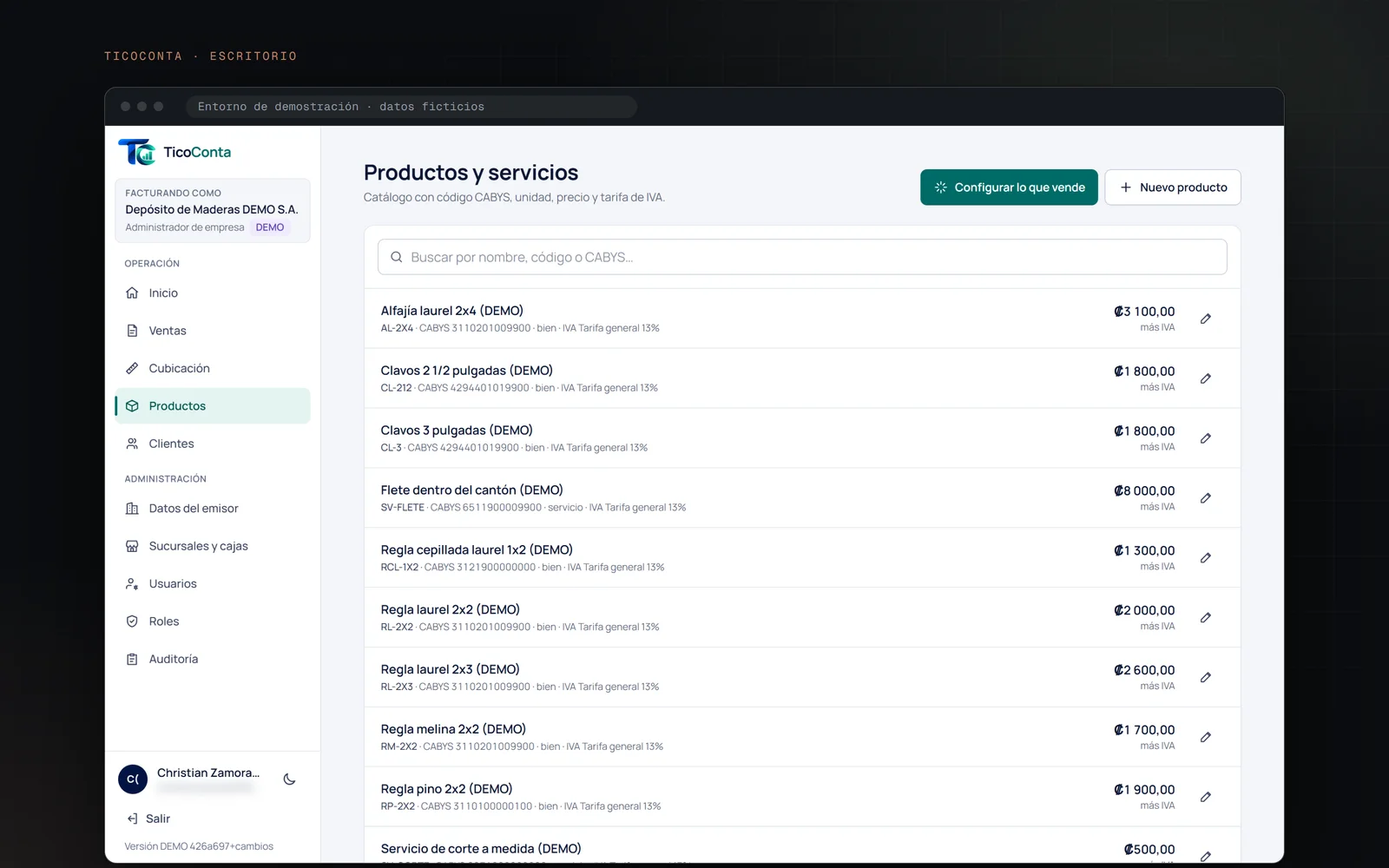
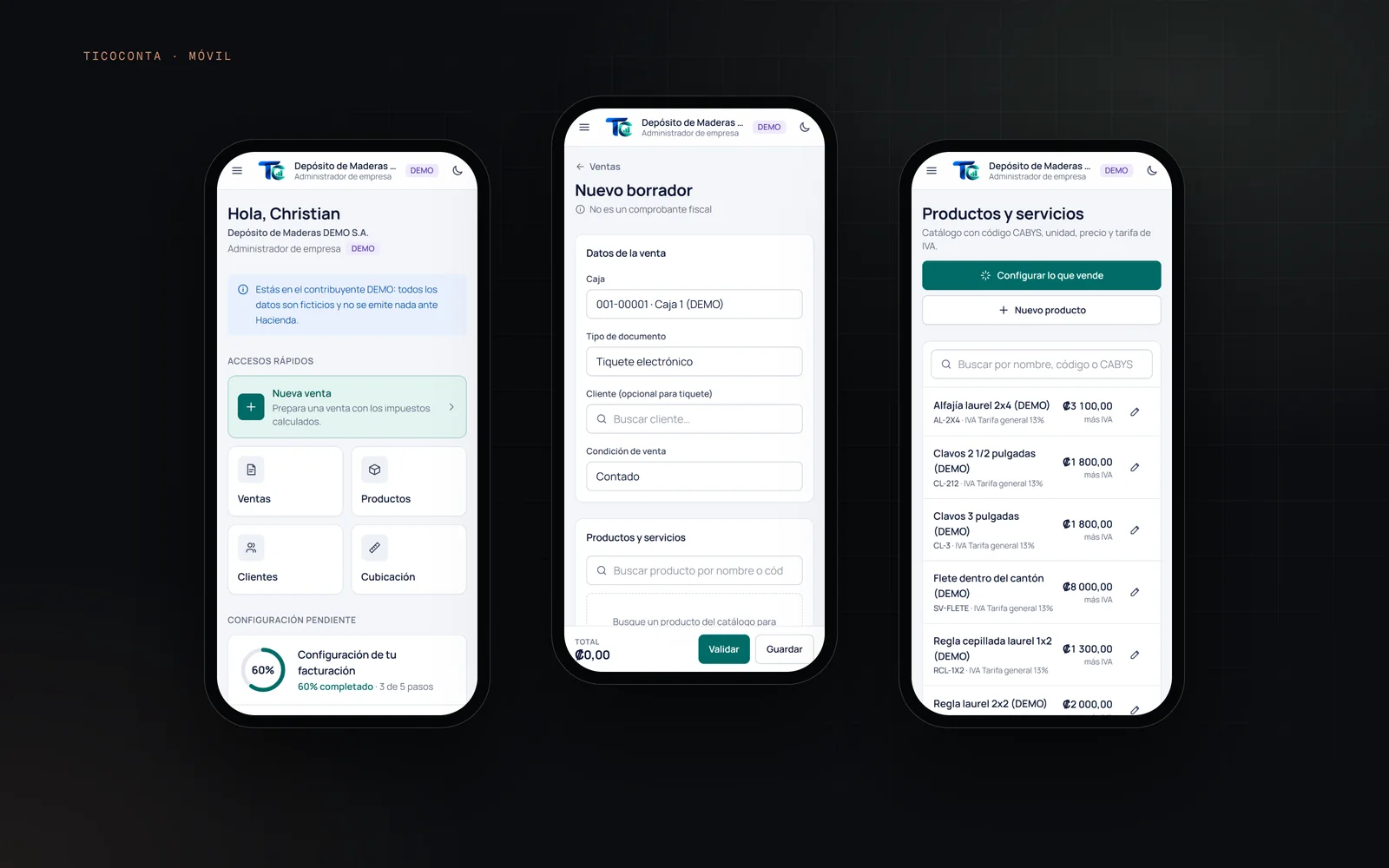
Interface on desktop and mobile
 Open full size ((opens in a new tab))
 Open full size ((opens in a new tab))
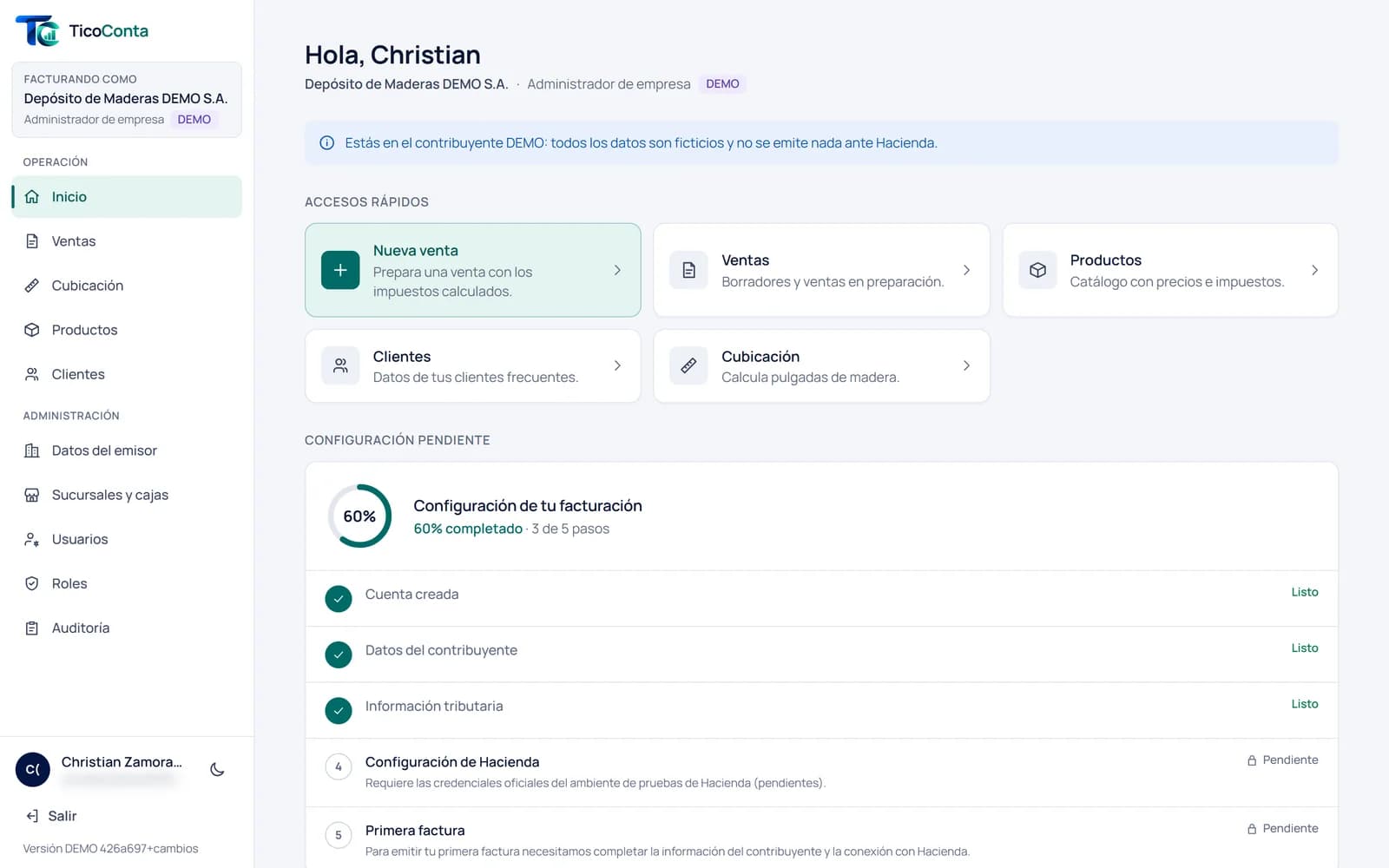
Screen gallery
 Open full size ((opens in a new tab))
Home · Shortcuts and invoicing setup progress. 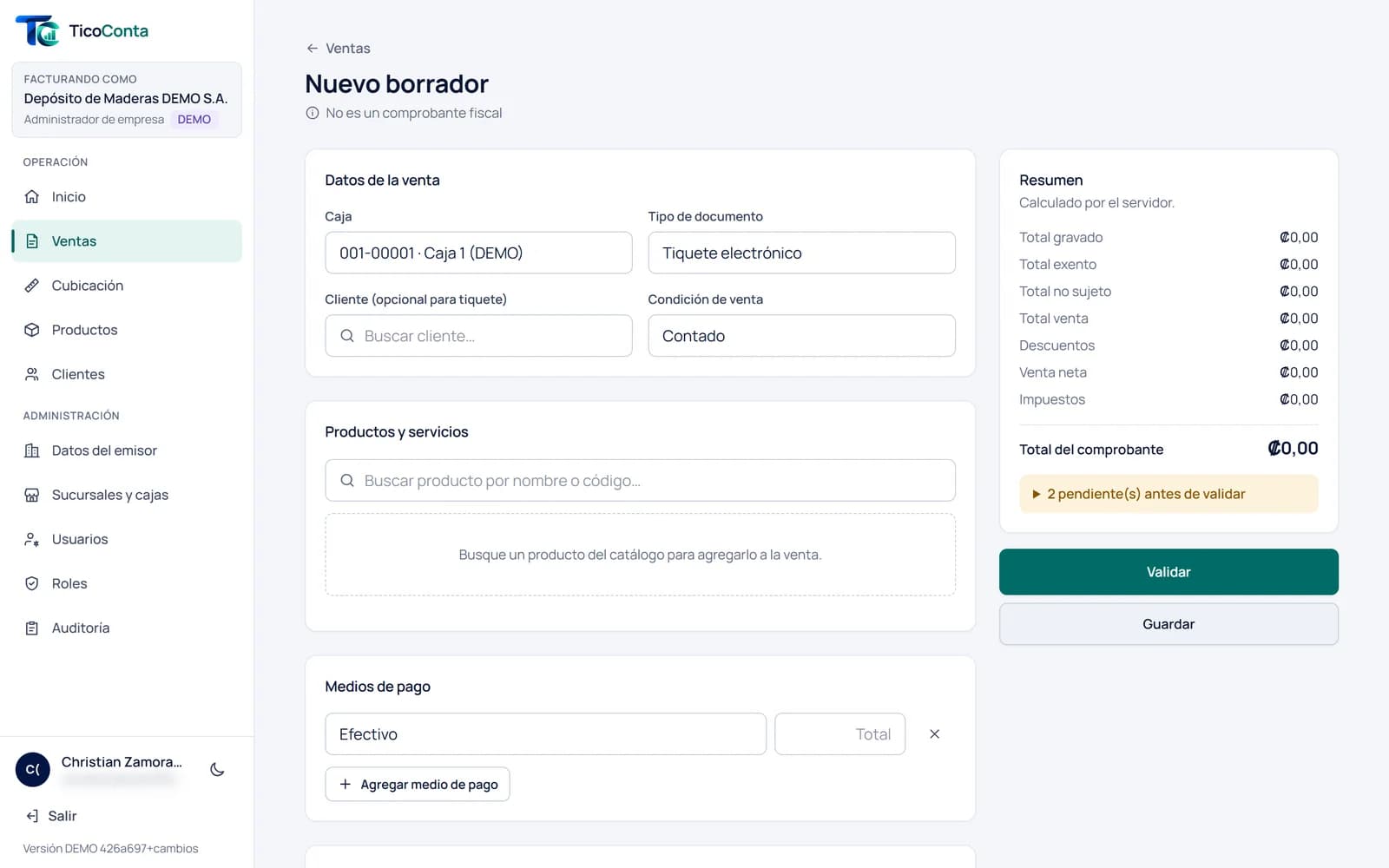 Open full size ((opens in a new tab))
New sale · Draft with the summary calculated by the server. 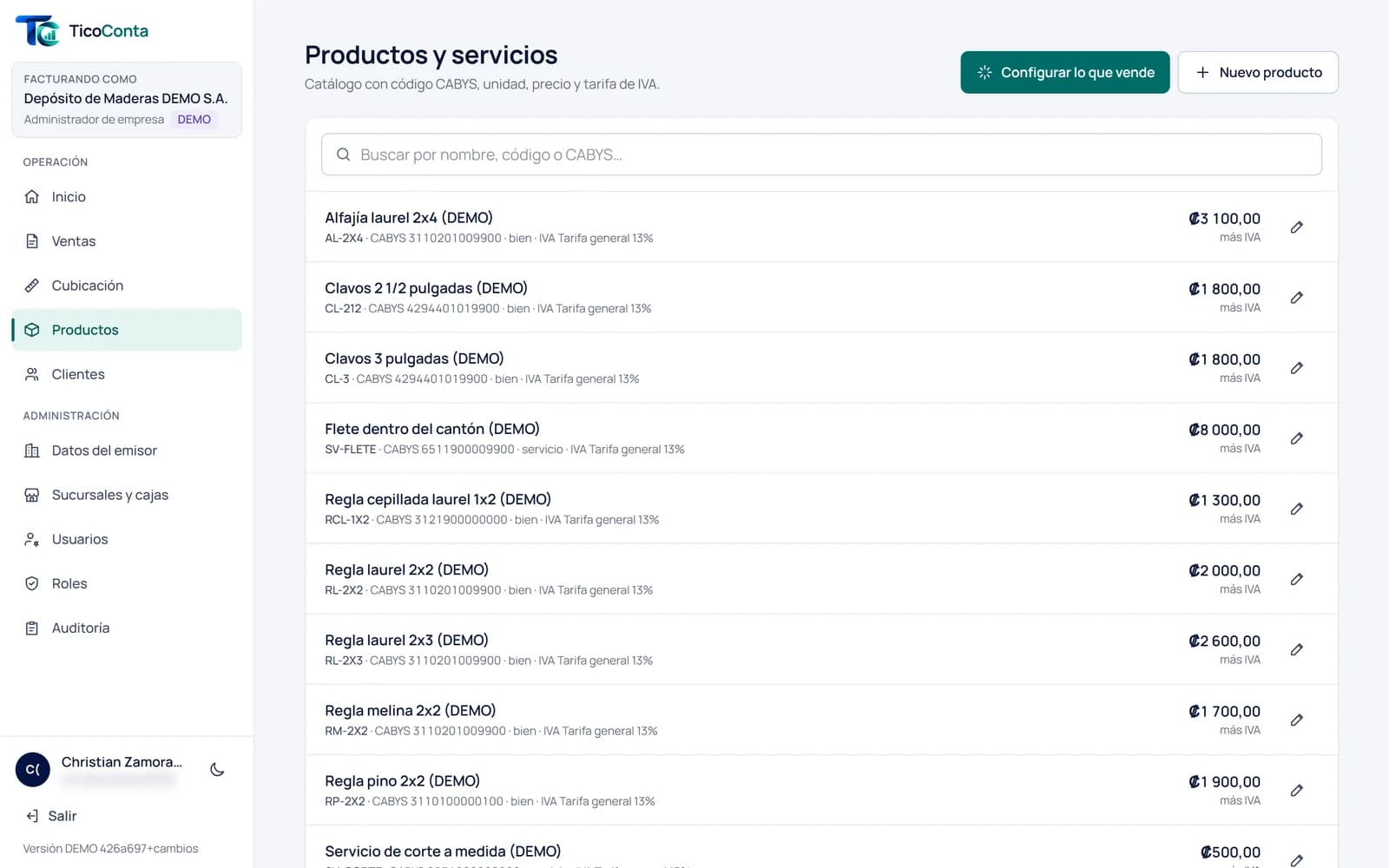 Open full size ((opens in a new tab))
Products · Catalogue with CABYS codes and pre-VAT prices. 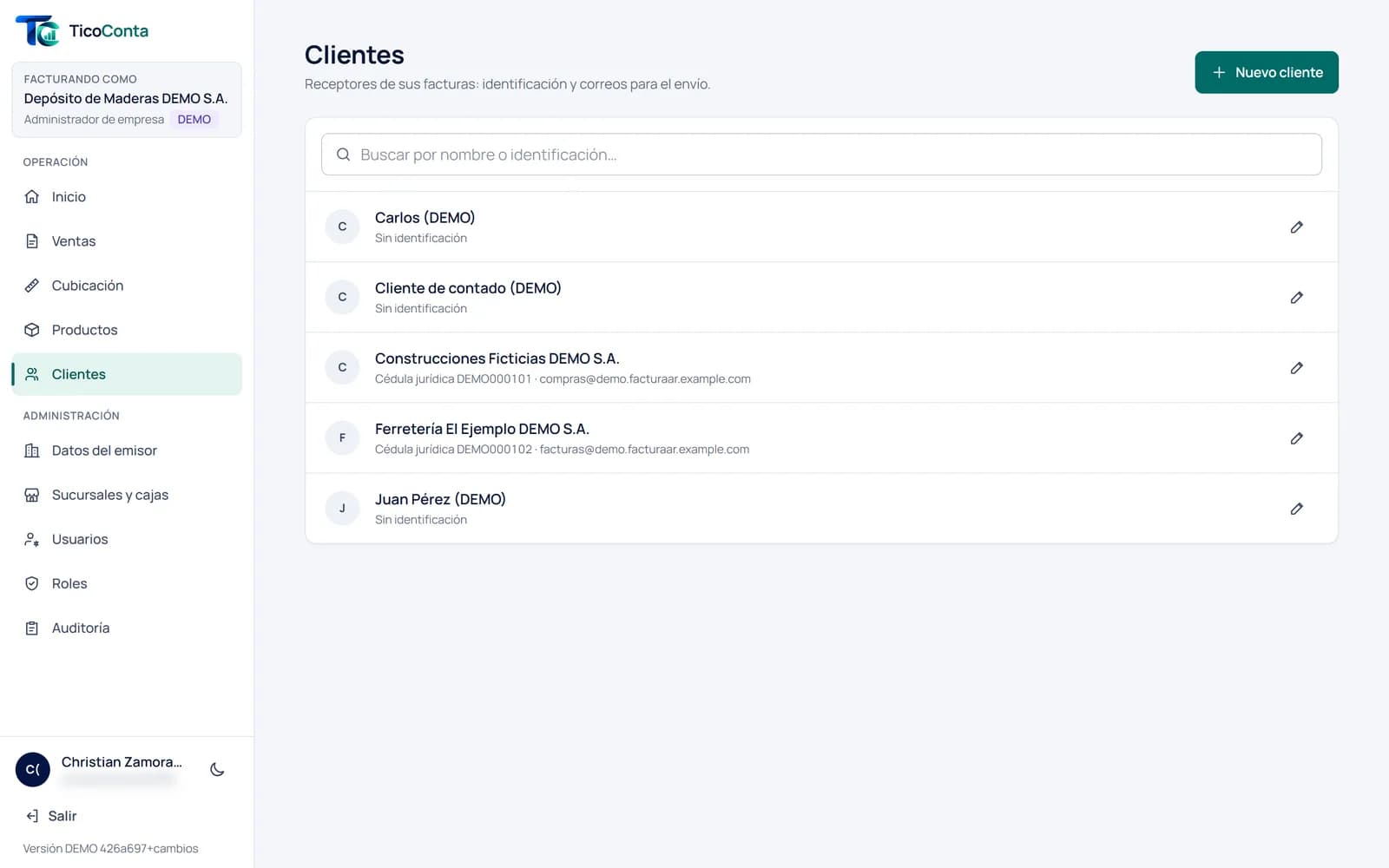 Open full size ((opens in a new tab))
Customers · Invoice recipients, all fictitious. 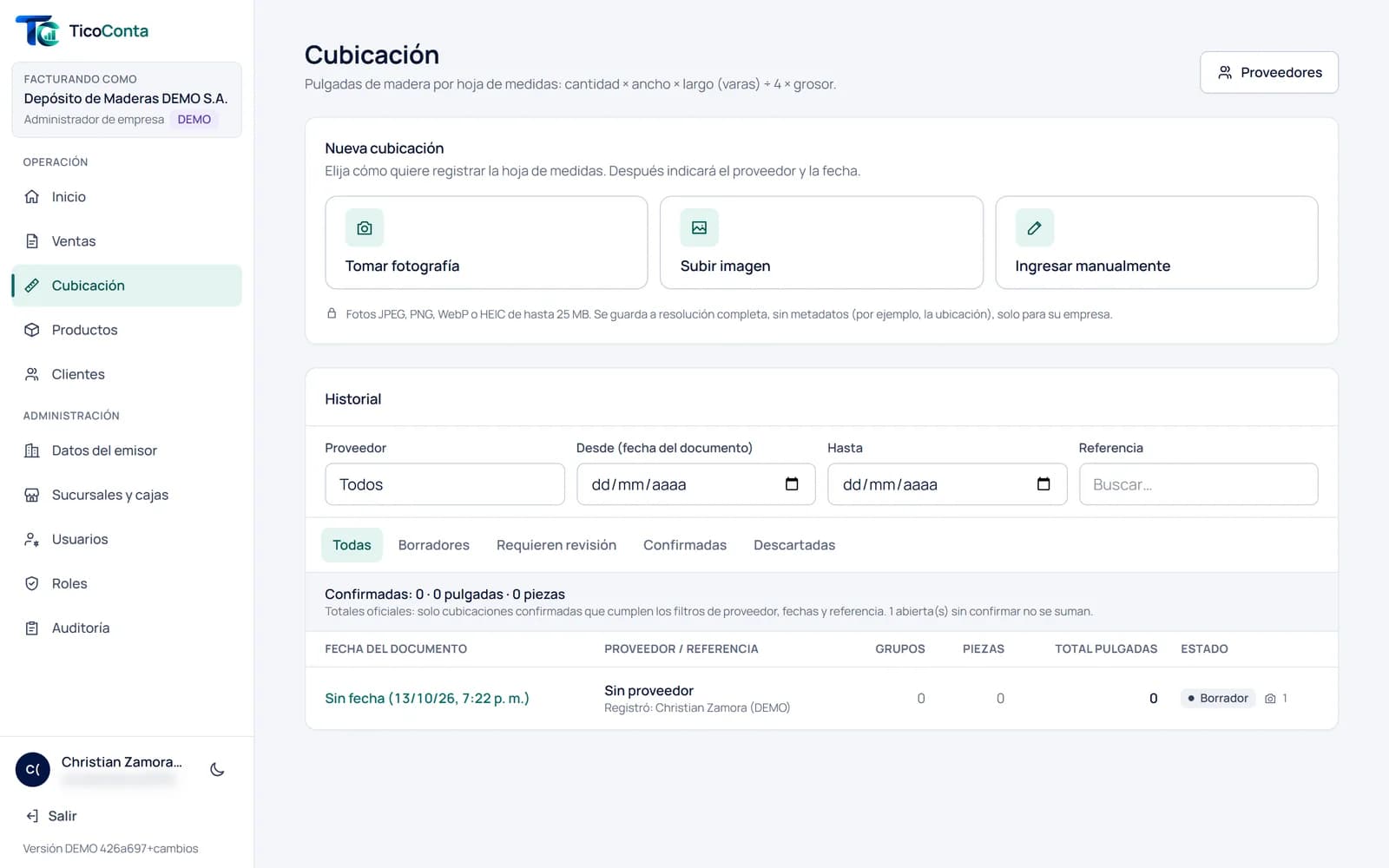 Open full size ((opens in a new tab))
Timber volume · Board inches from a measurement sheet, with human review.
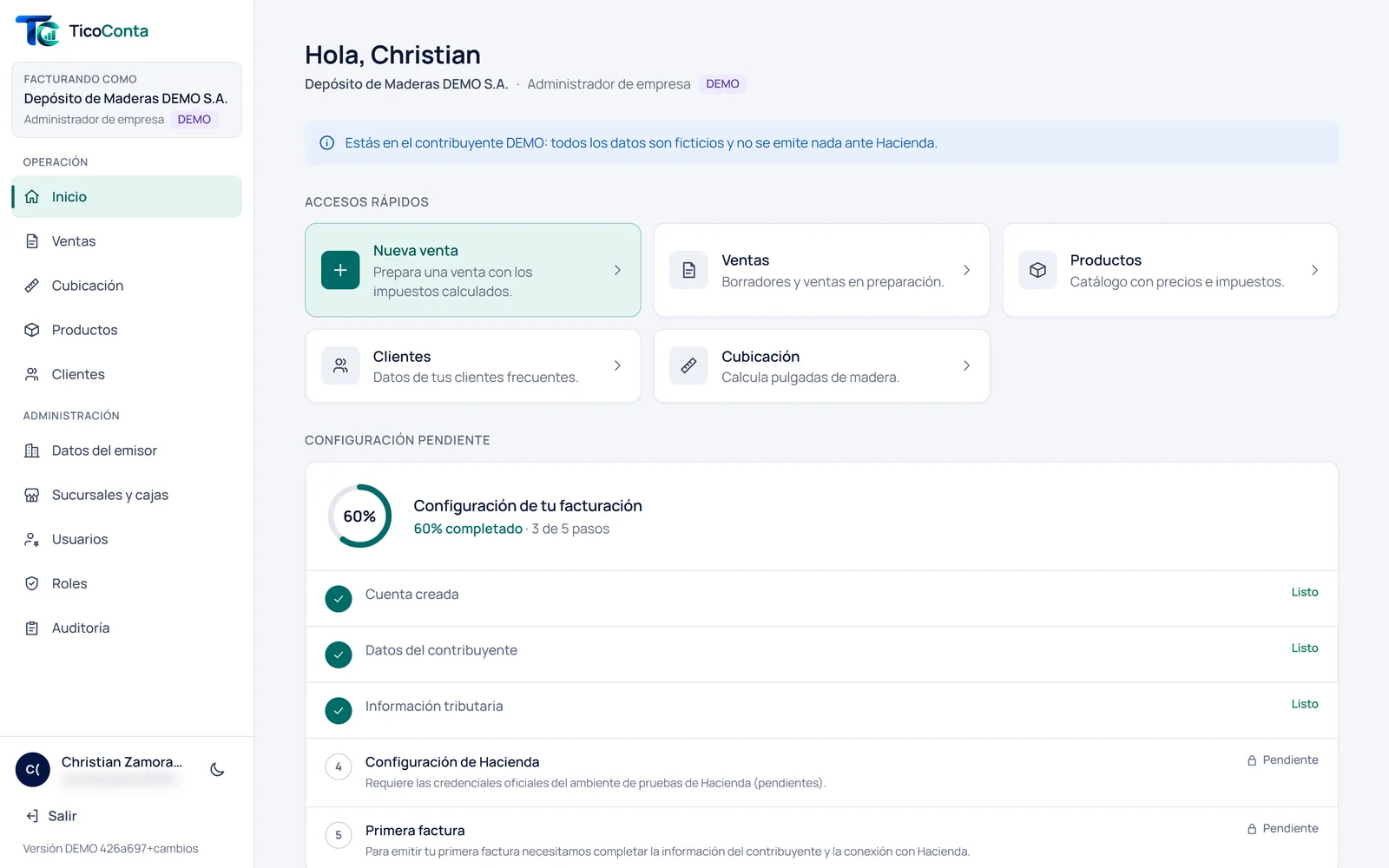
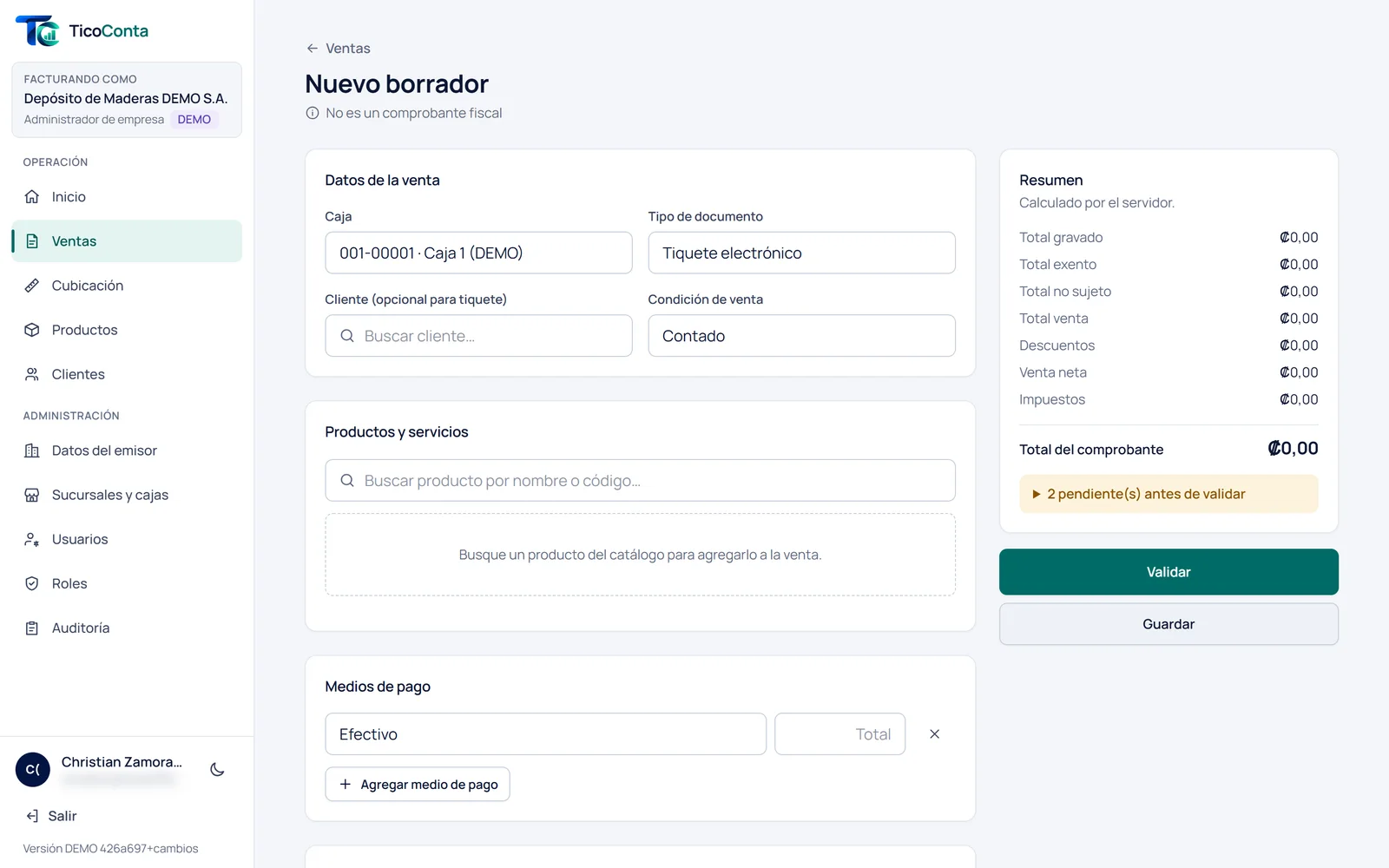
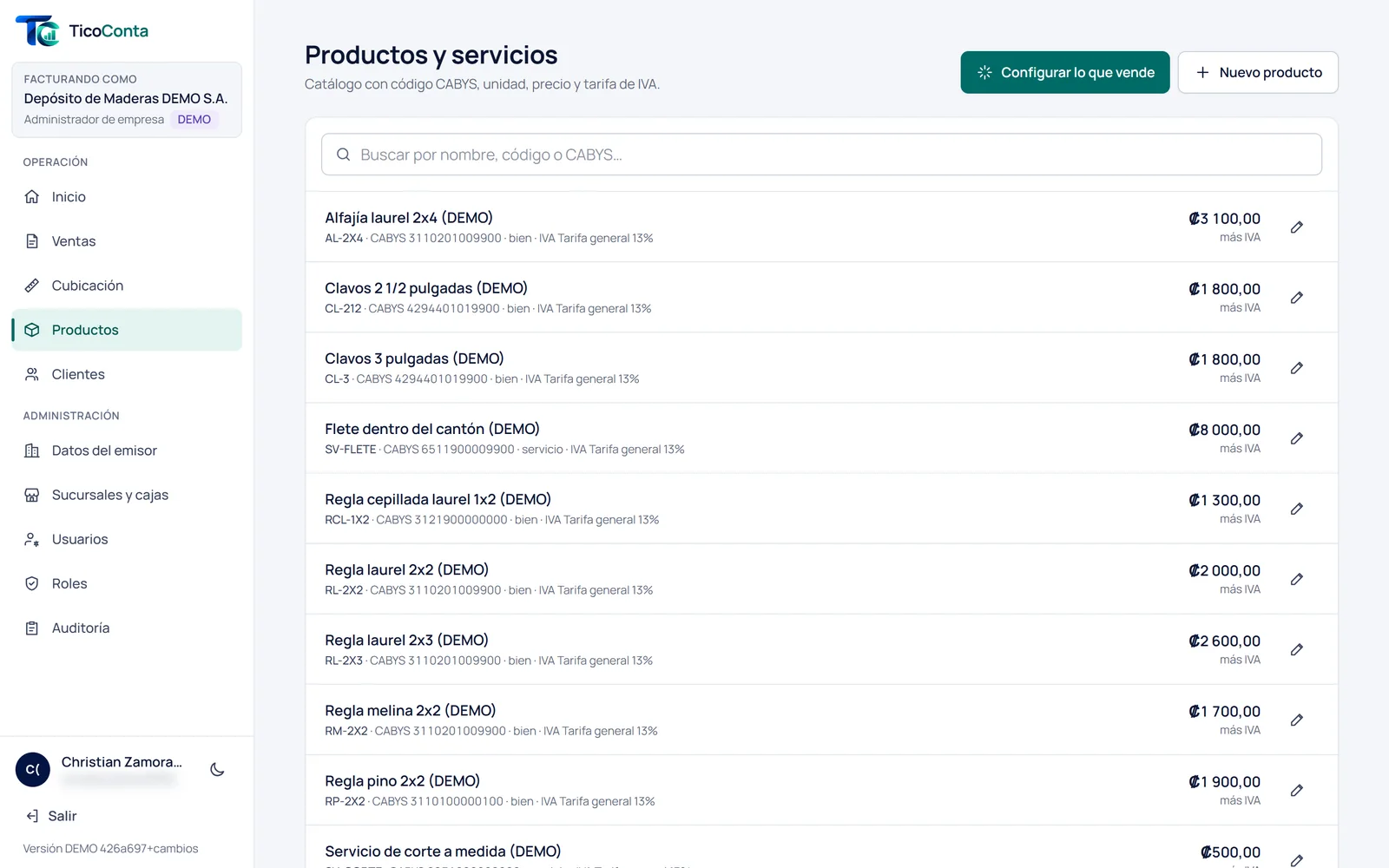
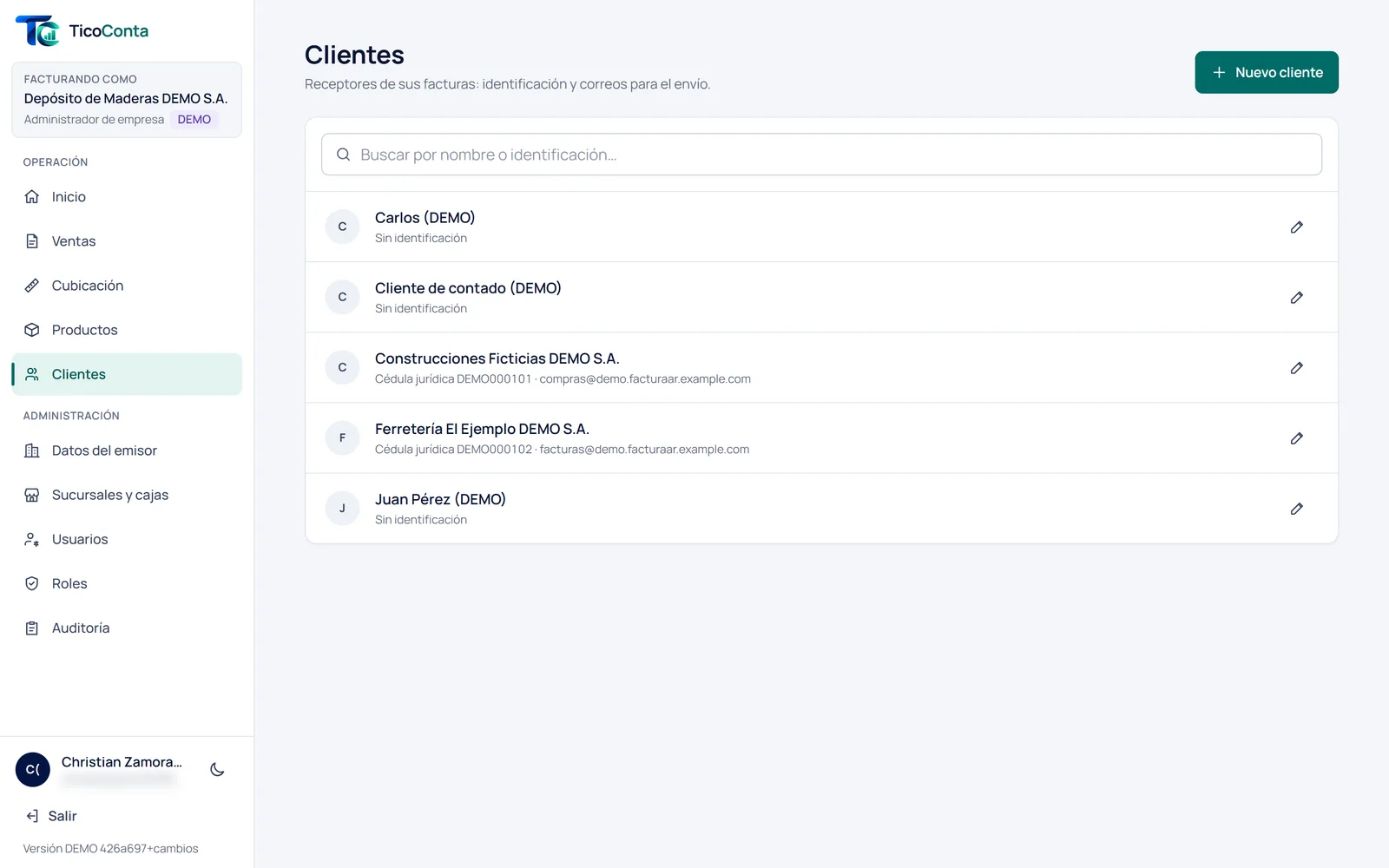
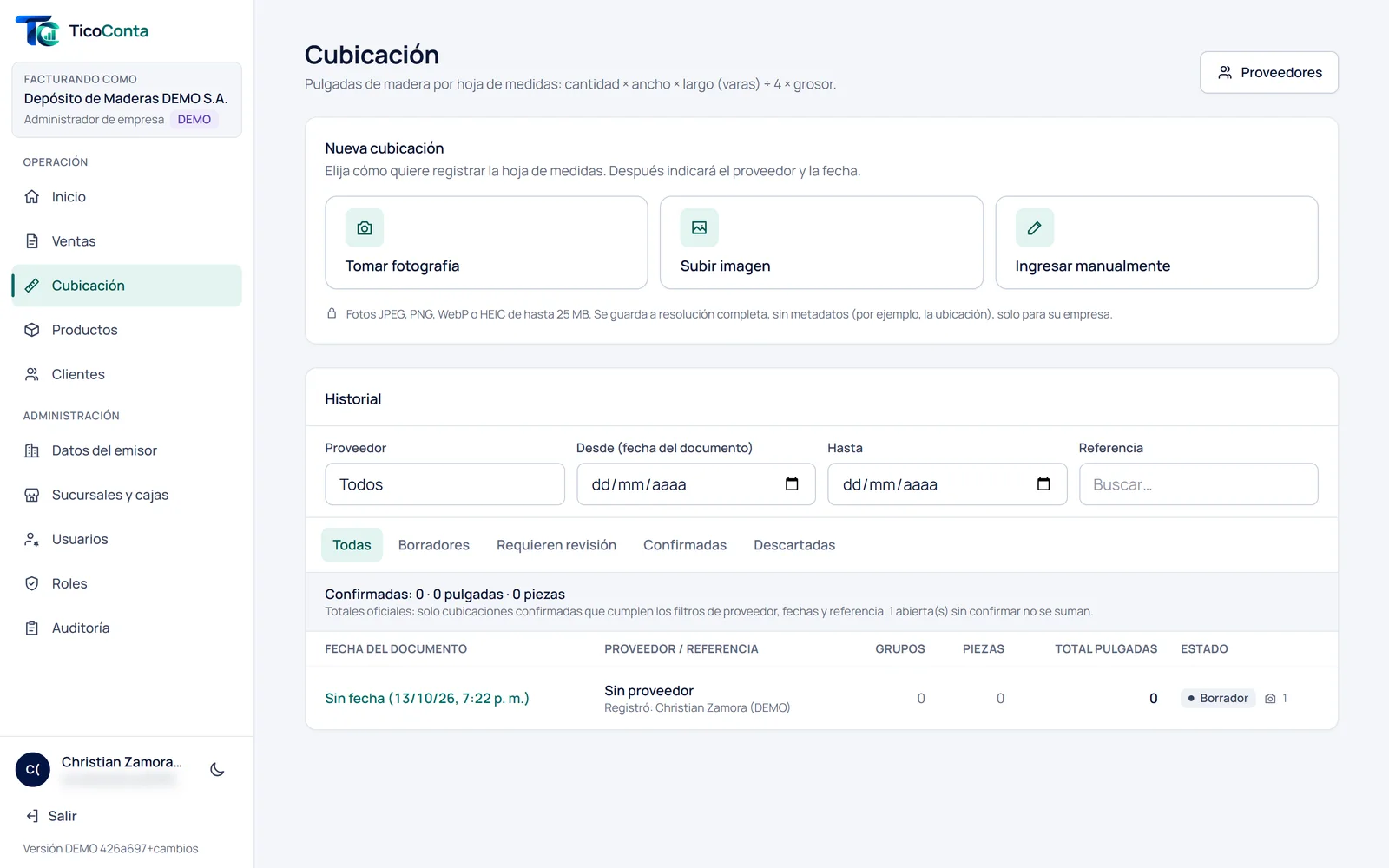
Real screenshots of TicoConta’s demo environment, with a fictitious taxpayer. Nothing was submitted to Hacienda and the account email is blurred.
Documentation and tests
- Partial stage 2 closing report, logs and architecture decision record.